


Sponge Sanding Block



Why Choose Us?
Rich manufacturing experience
With more than 20 years of abrasive products manufacturing in China, we’re familiar with our raw material manufacturers well and also control raw material quality to ensure premium abrasive products.
more
Professional R&D
Our technical team is committed to developing new products to provide different industrial application solutions and supporting customers in expanding their product range to enhance market competitiveness.
more
Strictly inspection system
Advanced testing equipment, strict testing standards, and strict quality control, over 13 years of experience as abrasives engineers' layer-by-layer check from raw material to finished products to ensure each batch of shipment is qualified before dispatching.
more
Well-trained team
Our team workers are well trained, customer requirement oriented, and provide professional solutions to meet customers' requirements.
more
Logistics and transportation
We have cooperated with professional freight forwarders by sea, land, and train for years, providing customers with the best solution to shipment, and updating the latest shipment tracking every week.
more
Solid technical strength
Advanced German production equipment, and standardized production process to ensure product quality qualified rate up to 99%.
Our production lines have passed the European Union CE certification, our abrasive products have been exported to Europe, North America, South America, the Middle East, and Asia with good market feedback, and the customer praise rate is more than 99% of the worldwide customers jointly choose your best abrasives manufacturer --- China Golden Abrasives.
more
After-sale service system
We pay more attention to our product's market feedback and follow up on the performance of our products closely. Once we get some complaints from your customers, we'll submit the pictures and video to our technical department for analysis, and then provide you with a solution to solve the issue in time.
more
What is sponge sanding block?
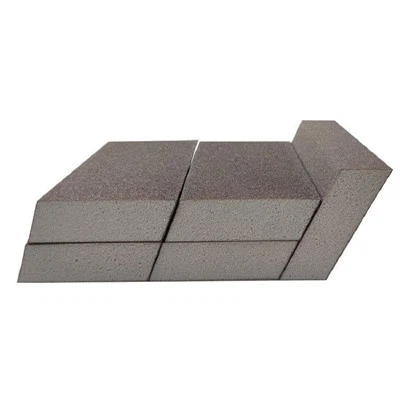
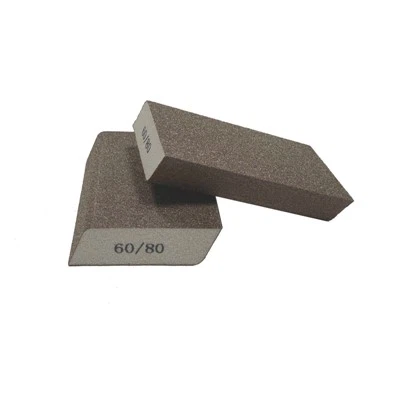
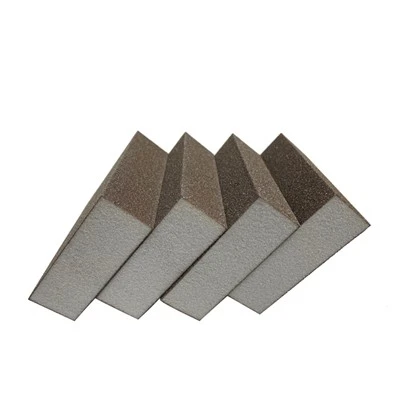
The sanding sponge blocks are a handheld tool used for sanding a variety of surfaces. Sponge sand blocks are usually made of flexible sponge materials and coated with abrasives (such as aluminum oxide, silicon carbide, etc.). The sponge block is easy to grip and maneuver, making it ideal for sanding irregular surfaces, contours, or hard-to-reach areas.
Aluminum oxide sanding sponges come in different shapes, sizes, and grits to meet different sanding needs. They are commonly used in projects such as woodworking, metalworking, automotive refinishing, and more. Abrasive Sanding sponge blocks can be used for both wet and dry sanding applications, depending on the type of material being processed and the desired finish. They are often preferred over traditional sandpaper because they are easy to use and conform to the shape of the surface being sanded.
Advantages of sponge sanding block
Excellent elasticity and flexibility
The sponge block sanding is highly flexible and uses high-density sponge material inside, which can easily fit irregular, curved, or corrugated surfaces. This allows for better contact with the workpiece, ensuring a more even sanding and minimizing the risk of leaving scratches or uneven spots. flexible sanding sponge are especially useful for sanding intricate details, corners, edges, and contours that may be difficult to reach with other sanding tools. The flexibility of the sponge sand block also allows it to easily cope with various complex grinding needs, improving work efficiency.
more
Easy to use
The soft, compressible nature of the sponge block makes it comfortable to hold and operate even for extended periods. They are lightweight and can be easily maneuvered in tight spaces or awkward angles. Additionally, its spongy texture absorbs some of the vibrations generated during the sanding process, reducing user fatigue and enhancing overall control. The design is reasonable and easy to hold and operate, allowing users to control the grinding strength and angle during use easily.
more
Strong water absorption capacity
During the grinding process, the wet and dry sanding sponge can absorb and store water, thereby keeping the grinding surface moist, reducing the heat and friction generated during the grinding process, and effectively protecting the surface of the object being ground from damage. At the same time, its water storage function also reduces the workload of flushing and removing chips, making the grinding process more convenient and comfortable.
more
Sharpness and wear resistance
Professional-grade sponge sand blocks use high-hardness, high-purity abrasives to ensure they remain sharp during the sanding process and remove excess material quickly. At the same time, the good combination of abrasive and sponge matrix provides excellent wear resistance, ensuring that the sand block can maintain good grinding ability after multiple uses.
more
Chip removal and heat dissipation
The sponge sand block's porous structure helps quickly discharge the debris generated by grinding, avoid clogging abrasive particles, and maintain sustained and efficient grinding effects. In addition, its water-absorbing properties help cool the work area, enabling wet and dry sanding methods to prevent material damage or fire risks caused by frictional heat.
more
Versatility
Sanding sponge blocks are available in a variety of grit sizes, allowing users to handle every stage of the sanding process, from powerful workpiece removal to fine finishing. They can be used on a variety of materials, including wood, drywall, plaster, metal, plastic, and painted surfaces, making them a versatile tool for woodworking, DIY projects, automotive work, and general home improvement tasks.
more
Type of sanding sponge blocks

[Drywall Abrasive Sanding Sponge Block]:
The Drywall Sanding Sponge Block is a professional sanding tool designed for precise sanding and trimming of right-angled edges and interior corners. dry wall sanding sponge's a versatile and convenient solution for smoothing imperfections, flattening joints, and preparing drywall for painting or finishing. High-quality right-angle sponge sand blocks combine the many advantages of sponge sand blocks with a unique right-angle shape, designed to provide the ultimate sanding experience and impeccable surface treatment.
The angle sponge sand block uses high-quality high-resilience sponge as the basic material, combined with advanced production technology, making the product excellent elasticity and flexibility. The right-angle design allows the sponge sand block to better fit various right-angled edges, inner corners, square frames, door and window frames, furniture edges and other parts that require precise grinding, ensuring uniformity and consistency of grinding. At the same time, the ore layer covered by its outer layer has been carefully selected and processed to have excellent grinding performance and durability, and can meet various grinding needs. This design ensures a seamless fit with the workpiece during the grinding process, avoids the problems of difficult to reach or uneven grinding with traditional grinding tools, and achieves efficient and precise corner processing.
Due to its special sponge material and sand planting process, the high-quality drywall sanding block can be used both wet and dry. In the dry grinding state, the sand block can quickly remove excess material and achieve efficient grinding; in the wet grinding state, the sand block can effectively reduce the working temperature and reduce dust flying, especially in sensitive environments or situations with extremely high surface quality requirements. It is very suitable for grinding and polishing various metals, plastics, wood and other materials, and is especially suitable for areas with irregular surfaces and hard-to-reach areas.

[Double Angled Sanding Sponge Block]:
The Double-angle Sponge Sanding Block is an innovative sanding tool developed specifically for efficient sanding tasks at complex angles and contoured edges. It cleverly combines the flexibility of sponge with the abrasive power of mineral sand. The superior performance of the sponge sand block and the unique double bevel design can better fit and grind various irregular surfaces, aiming to provide users with more accurate, convenient and efficient grinding solutions.
The double-bevel sponge sand block uses high-resilience sponge as the base material, and the sponge is attached with imported rubber, making the product less likely to break when polishing the wall. High-quality brown corundum abrasive can quickly remove stains, rust and scratches on the surface, making the surface of the object clean and smooth. Its excellent elasticity and flexibility can easily adapt to surfaces of various shapes and angles, ensuring grinding uniformity and consistency. The porous structure of the sponge makes it have good water absorption and water storage capacity, which can keep it moist during the grinding process, reduce the generation of heat and friction, thereby protecting the surface of the object being ground from damage.
The core feature of the wet dry sanding sponge is its unique double-bevel shape, which is usually designed with a 45°or 30° diagonal bevel to form two intersecting bevels. This design allows the sand block to perfectly fit various non-right-angled edges, chamfers, arc edges, complex contours and other hard-to-reach parts, greatly improving grinding efficiency and precision and avoiding the need for traditional grinding tools to deal with such complexities. Missing or over-sanding problems that may occur when shaping.
While traditional abrasive tools often struggle with irregular or beveled surfaces, the dual angle sanding sponge handles these challenges with ease. Its double bevel design allows the grinding surface to fit surfaces of various angles and bevels, whether it is a flat surface, a curved surface or an inclined surface, to achieve efficient and uniform grinding effects. This characteristic makes the double-bevel sponge sand block have broad application prospects in metal processing, plastic manufacturing, wood processing and other fields.

[Dual Angled Sanding Sponge Block]:
The Double-angle Sponge Sanding Block is an innovative sanding tool developed specifically for efficient sanding tasks at complex angles and contoured edges. Automotive sanding sponge cleverly combines the flexibility of sponge with the abrasive power of mineral sand. The superior performance of the sponge sand block and the unique double bevel design can better fit and grind various irregular surfaces, aiming to provide users with more accurate, convenient and efficient grinding solutions.
The foam sanding sponge uses high-resilience sponge as the base material, and the sponge is attached with imported rubber, making the product less likely to break when polishing the wall. High-quality brown corundum abrasive can quickly remove stains, rust and scratches on the surface, making the surface of the object clean and smooth. Its excellent elasticity and flexibility can easily adapt to surfaces of various shapes and angles, ensuring grinding uniformity and consistency. The porous structure of the sponge makes it have good water absorption and water storage capacity, which can keep it moist during the grinding process, reduce the generation of heat and friction, thereby protecting the surface of the object being ground from damage.
The core feature of the wet dry sanding sponge is its unique double-bevel shape, which is usually designed with a 45°or 30° diagonal bevel to form two intersecting bevels. This design allows the sand block to perfectly fit various non-right-angled edges, chamfers, arc edges, complex contours and other hard-to-reach parts, greatly improving grinding efficiency and precision and avoiding the need for traditional grinding tools to deal with such complexities. Missing or over-sanding problems that may occur when shaping.
While traditional abrasive tools often struggle with irregular or beveled surfaces, the dual angle sanding sponge handles these challenges with ease. Its double bevel design allows the grinding surface to fit surfaces of various angles and bevels, whether it is a flat surface, a curved surface or an inclined surface, to achieve efficient and uniform grinding effects. This characteristic makes the double-bevel sponge sand block have broad application prospects in metal processing, plastic manufacturing, wood processing and other fields.

[ARC Sanding Sponge Blocks]:
The right-angle arc-angle sponge sand block is an innovative grinding tool that integrates right-angle and arc-angle grinding functions. Its design concept is to perfectly combine the flexibility of the sponge with the grinding power of the mineral sand. It is specially designed to accurately handle various grinding tasks such as right-angled edges, internal corners, arc edges, and complex contours. It cleverly combines the multiple advantages of sponge sand blocks with a unique geometric design to provide users with an unprecedented efficient, precise and convenient grinding experience.
The design of the sponge sand block with right angle and arc angle cleverly integrates the two forms of right angle and arc angle, usually including a 90° right angle surface and an arc surface with a certain radius. This integrated design allows the sand block to easily handle various grinding tasks such as right-angled edges, internal corners, square frames, door and window frames, furniture edges, as well as arc edges, cylindrical objects, pipe interfaces, complex contours, etc., greatly improving the grinding efficiency. efficiency and scope of application.
The right-angled arc-shaped sponge sand block is made of high-quality alumina abrasives, which has the characteristics of high strength, high hardness, high temperature resistance, corrosion resistance, etc., ensuring that it can be used when processing various hard, soft, metal, and non-metallic materials. Maintain excellent grinding performance. The high-density sand planting process ensures that the abrasive particles are evenly and firmly embedded in the sponge matrix to form an efficient and long-lasting grinding layer. This process not only improves grinding efficiency, but also ensures uniform wear of the abrasive during use, extending the service life of the sand block. At the same time, a wide range of abrasive grain size options (such as P60-P280) meet all-stage grinding needs from rough grinding to fine polishing.
The sponge has excellent elasticity and flexibility, which allows it to easily adapt to surfaces of various shapes and angles, whether it is a flat, curved or right-angled surface, achieving an even and detailed grinding effect. At the same time, the porous structure of the sponge makes it have good water absorption and water storage capacity, which can keep it moist during the grinding process, effectively reducing the generation of heat and friction, thereby protecting the surface of the object being ground from damage. Ideal for paint and varnish removal, woodworking, automotive, drywall and stucco, metal and more.
Application of sanding sponge blocks

Woodworking
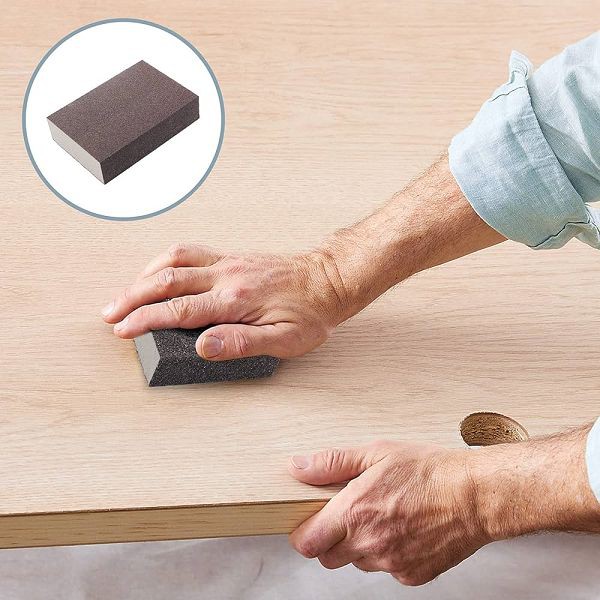
Sponge blocks are often used in woodworking for sanding wood surfaces, edges and contours.
In the furniture manufacturing process, sponge sand blocks are one of the indispensable tools. They are used to carefully polish the wood surface, remove saw marks, burrs, scratches and other defects, and prepare for subsequent painting (such as painting, waxing or coating). oil) creates a smooth, neat surface. Its good elasticity and plasticity allow the sponge sand block to easily adapt to various complex shapes and curves of wood, ensuring uniform sanding results. They can be used on furniture, cabinets, trim and other wood structures.

Drywall Finishing
In construction and renovation projects, sponge sand blocks are ideal for treating wall and ceiling materials such as drywall, putty, and latex paint. Its soft texture conforms to irregular surfaces to help smooth joint material, seams and patches, and effectively removes putty marks and sandpaper marks to ensure a seamless and professional finish before painting or wallpapering.

Metal processing
In metal processing, sponge sand blocks can be used to polish the oxide layer, scratches, weld scars, etc. on the surface of light metals (such as aluminum, copper), and remove rust for electroplating, spraying, anodizing, etc. marks, corrosion or defects. For heavier metals, a sponge sand block can be used for initial grinding, followed by a hard grinding wheel for fine finishing. They are used on a variety of metal objects, including automotive parts, metal furniture, sculptures, and decorative metalwork.

Automobile repair
In automobile maintenance and repair, sponge sand blocks can be used to polish scratches, dents, welds and other parts of body sheet metal parts to provide guarantee for surface treatment before painting. Its good fit facilitates precise sanding on complex curved surfaces and tight spaces. They can be used to smooth body fillers, remove paint imperfections and sand primer surfaces before applying paint or clearcoat.
Crafts and Hobbies
Sanding sponge blocks are also used in a variety of crafts and hobbies, such as model making, sculpture, and jewelry making. They provide precise control for sanding small and intricate details and contours in delicate materials such as clay, resin or foam.

Marine and Marine Maintenance
Sanding sponge blocks are used in marine applications for sanding and refinishing hulls, decks and other surfaces. They help remove old paint, smooth fiberglass, and prepare surfaces for marine paint and finishes.
FAQ
FAQ
Q: 1.What is better abrasive sandpaper or sanding sponge?
Abrasive Sandpaper is a tool commonly used for surface preparation that consists of a layer of abrasive particles adhered to the backing of paper. Sandpaper has different thicknesses, and you can choose the appropriate model for sanding according to your needs. Its advantages include strong grinding power and effective removal of surface defects, especially for hard or rough surfaces.
The sanding sponge blocks are a softer and gentler sanding tool. It is usually made of a sponge material covered with a layer of fine abrasive particles. The advantage of a sanding sponge is its softness and ease of control, making it an advantage when working with delicate or delicate surfaces. At the same time, the sanding sponge can also absorb moisture and abrasives to keep the surface moist and smooth during the sanding process.
Q: 2.What are the benefits of sponge sand blocks?
Shock absorption and comfort: The sponge sand block has a good buffering effect and can absorb part of the vibration generated during the grinding process, reducing hand fatigue and providing a more comfortable grinding experience.
Dust and water absorbency: Sponge sand blocks can absorb dust or water, which helps reduce dust generated during the sanding process and improves the cleanliness of the working environment. Some sponge sand blocks can be used under wet grinding conditions to further reduce dust and cool the workpiece.
Durability and reusability: High-quality sponge sanding blocks can be cleaned and reused, making them more cost-effective in the long run than single-use sandpaper.
Q: 3.What are the factors to consider when choosing the right sanding sponge?
2. Material Compatibility: Consider the materials you want to sand. Different materials may require different levels of abrasiveness or flexibility. Make sure the sanding sponge you choose is compatible with the material you're working with, whether it's wood, metal, drywall, plastic, or another substrate.
3. Surface type: Consider the type of surface you want to sand. If you're working on a flat or contoured surface, a standard sanding sponge may suffice. For irregular or curved surfaces, consider using a flexible sanding sponge, which can conform to the contours of the surface more effectively.
4. Size and shape: Choose a sanding sponge that matches the size and shape of the area you want to sand. Larger sponges are suitable for larger surfaces, while smaller sponges are better suited for detail work or hard-to-reach areas. Additionally, consider the shape of the sponge, such as rectangular, angled, or contoured, depending on your project needs.
Q: 4.Will the sponge sand block come off when sanding?
Q: 5.How to remove dust from sponge sand block?
2. Knock cleaning: Gently tap the edge or back of the sponge sand block so that it hits a flat and hard surface (such as the edge of a workbench or a wooden block), and use vibration to shake out the dust embedded in the pores of the sponge. Attention should be moderate to avoid damaging the sponge sand block.
3. Air blowing: Use a compressed air gun or hand-held hair dryer to blow air against the sponge sand block at a low pressure setting to blow dust away from the surface and pores of the sponge. Be careful to keep an appropriate distance to prevent strong airflow from causing damage to the sponge.
4. Clean with water: For more stubborn dust or debris, you can rinse the sanding sponge under running water. Use warm water and gently squeeze the sponge to help rinse away any remaining dust particles. Allow the sponge to dry completely before using it again.
