


Non Woven Abrasives
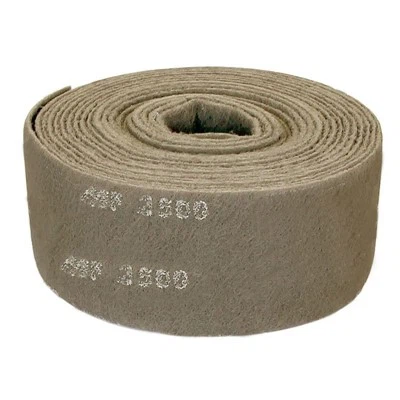
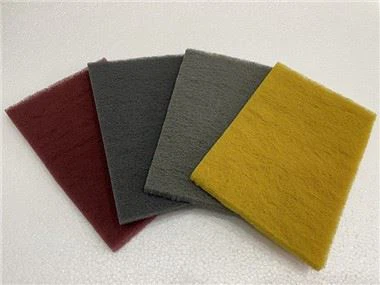
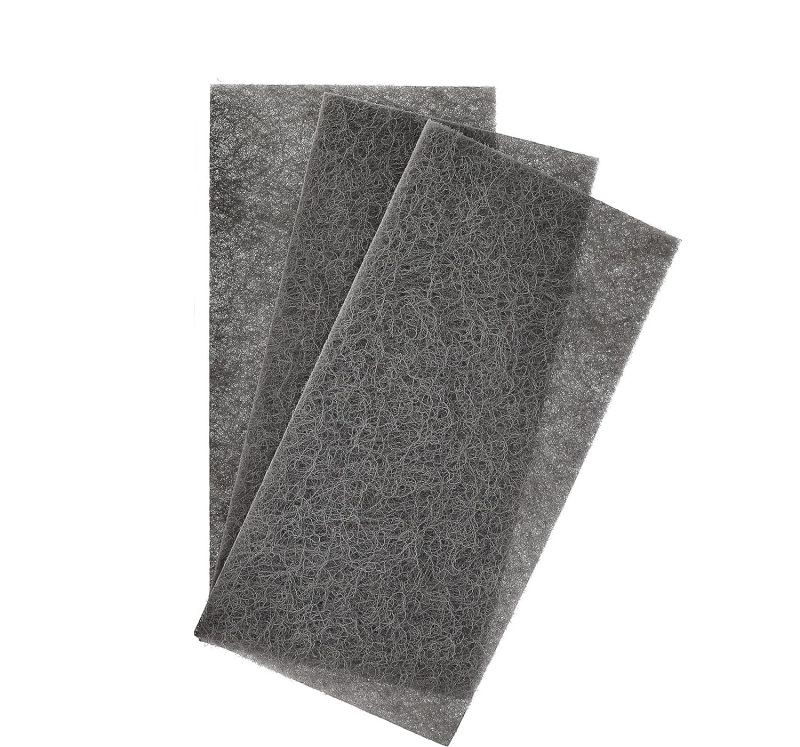
Non-woven abrasives are a three-dimensional web of fibers with globules of resin and abrasive embedded into the network of fibers. Typically, the fibers are nylon or another synthetic material. The abrasive types can range from silicon carbide to aluminum oxide or ceramic alumina. Non-woven materials are converted into belts, discs, pads, flap wheels and flap discs to fit a variety of power tools.




Smooth material surface
With fine fiber structure and soft surface, it can effectively remove burrs and uneven parts on the abrasive surface, making the surface smoother.
High precision
It can be made into grinding discs of various thicknesses to meet the application occasions with different grinding precision requirements, so as to make the grinding results more accurate.
Dust-free
Since the non-woven fabric itself is a fiber structure rather than a powdery or granular substance, no dust will be generated during the grinding process, reducing environmental pollution and harm to workers.
Longer material life
With the characteristics of softness and wear resistance, it can reduce the wear and damage of the abrasive, thereby extending its service life.
Good air permeability
The physical structure is open, with many small pores and good air permeability. It is widely used in sanitary products, medical dressings and other fields.
Good water absorption
It has good water absorption and is widely used in medical dressings, sanitary napkins and other fields.
Good plasticity
The physical structure is open and the fibers are relatively loose, so it can be formed by various processing methods and is widely used in automotive interiors, home decoration, etc.
Why Choose Us
Rich manufacturing experience
More than 20 years abrasive products manufacturing in China, we’re familiar with our raw material manufacturers well, and also control raw material quality to ensure premium abrasive products.
Professional R&D
Our technical team workers commit to developing new products to provide different industrial applications solutions, and support customers to expand products range to enhance market competitive.
Well-trained team
Our team workers are well trained, customer requirement oriented, and provide professional solutions to meet customers requirement.
After sale service system
We pay more attention to our products market feedback, and follow up our products performance closely.Once we got some complaints from your customers, we'll submit the pictures and video to our technical department for analyzing, then provide you the solution to solve the issue in time.
Preparation Technology of Non-woven Abrasive
Melt blowing method
The high molecular polymer or polymer mixture is melted under high temperature conditions, and then the molten material is evenly sprayed onto the rotating drum through the nozzle to form a fiber web, and a non-woven fabric is formed on the drum. This method has the advantages of high production efficiency, simple process, and low equipment investment, and is suitable for the production of nonwoven fabrics with high strength, high torsional stiffness, and high thickness.
Wet paper making method
Dissolve the fiber mixture and chemical additives in water, then spread the mixture on the screen through a wet paper machine, and form a fiber network on the screen, and then form a non-woven fabric through drying, compaction and other processes. This method has high production efficiency, uniform fibers, and is suitable for producing non-woven fabrics with fine fibers, low density and high air permeability.
Air blowing method
The fiber mixture is blown onto the mesh belt by a high-pressure fan, and then formed into a non-woven fabric through compaction, bonding and other processes. This method has the advantages of high production efficiency, wide application range, and good controllability, and is suitable for the production of non-woven fabrics with low density, high air permeability, and good sound absorption.
Dry net making method
The fiber mixture is directly formed on the mesh belt to form a fiber web, and is formed into a non-woven fabric through processes such as compaction and bonding. This method has the advantages of high production efficiency, simple operation, and is suitable for non-woven fabrics with large area and large thickness.
Acupuncture
The fiber mixture is fed into the needle punching machine through the feeder, repeatedly punched and compacted by multiple needle punching plates inside the needle punching machine, and the fiber mixture is formed into a non-woven fabric. This method has the advantages of high production efficiency, soft hand feeling, high strength and wear resistance, and is suitable for the production of protective clothing, carpets, filters and other products.
Ultrasonic non-woven fabric preparation technology
Ultrasonic vibration is used to control the dispersion and arrangement of fibers, so that the fibers are more closely combined, thereby improving the physical properties and mechanical strength of the non-woven fabric. And there is no need to use harmful chemicals, which is environmentally friendly and meets environmental protection requirements. In addition, ultrasonic non-woven fabric preparation technology can also adjust the frequency and intensity of ultrasonic waves according to different needs and materials to achieve the best preparation effect.
Microwave non-woven fabric preparation technology
The principle is to use the high-frequency vibration of microwaves to make the internal friction of the raw material molecules generate heat, thereby heating to a molten state. It is a non-woven fabric preparation method using microwave heating. Compared with traditional preparation methods, microwave non-woven fabric preparation technology has the advantages of faster heating speed, higher efficiency and better heating uniformity. The uniformity of microwave heating can ensure the quality stability of non-woven fabrics, and the preparation process can be completed without using harmful chemicals, which meets environmental protection requirements.
Non-woven Abrasives: Abrasive Grades
Coarse
For removing scale, rust, deburring, flying edges, paint and coatings.
Medium
For lighter surface preparation and cleaning, weld cleaning, blending, light deburring.
Fine
For light cleaning, blending and finishing.
Ultra-fine
For final finishing and polishing, decorative finishing.

While non-wovens are made in a different way than conventional coated abrasives, both types of products use many of the same abrasive minerals. Silicon carbide is sharper, cuts faster and produces finer scratch patterns on most surfaces. Aluminum oxide is more durable and tends to last longer. It is more aggressive on certain applications (such as hardened steel parts), and produces less discoloration on aluminum. When the non-woven supplier talks about grit, he is referring to the size of the abrasive grain impregnated into the nylon web. The lower the number, the larger the grains. Use of large particles (coarse grit) results in a more aggressive cut and a coarser finish. Small size particles result in a non-woven product that produces fine surface finish, if all other conditions are equal. In specifying a conventional bonded or coated abrasive product, the purchaser selects a specific grit size -say, 120 grit. With non-woven abrasives, by comparison, one of the following designations is used.
How to Maintain Non Woven Abrasives
Step 1: Regular inspection
Begin maintenance with a thorough inspection of your non-woven wheels before each use. Look for signs of wear, such as fraying, embedded debris, or loss of abrasive material. This inspection ensures the wheel is safe and effective for use.
How to inspect:
Visual inspection: Check for visible signs of wear or damage.
Touch test: Feel the wheel's surface for smoothness and irregularities.
Rotation test: Spin the wheel manually to ensure it rotates evenly without wobbling.
Step 2: Cleaning your non-woven wheels
Cleaning removes debris and contaminants that can impair performance and damage surfaces. Use appropriate methods to clean non-woven wheels effectively.
Cleaning methods:
Brush cleaning: Use a stiff brush to remove surface debris and buildup gently.
Compressed air: Blow out embedded particles using compressed air to clear fine dust.
Solvent cleaning: For stubborn residues, use a mild solvent compatible with the wheel's material. Apply solvent sparingly with a cloth and wipe the wheel's surface.
Step 3: Proper storage
Proper storage prevents damage and contamination, preserving the wheel's effectiveness over time.
Storage tips:
Dry environment: Store wheels in a cool, dry place away from direct sunlight and moisture.
Avoid compression: Prevent heavy stacking or pressure on stored wheels to maintain their shape and performance.
Individual wrapping: Wrap wheels individually in protective material to shield them from dust and debris.
Step 4: Usage guidelines
Correct usage practices maximize the efficiency and longevity of non-woven wheels.
Usage tips:
Optimal speed: Operate at the manufacturer's recommended speed settings to avoid premature wear.
Appropriate pressure: Apply consistent, moderate pressure during use to achieve desired results without damaging the wheel or workpiece.
Angle and direction: Use the wheel at recommended angles and directions for specific applications to enhance performance and safety.
Step 5: Regular replacement
Even with proper care, non-woven wheels eventually wear out and require replacement.
Indicators for replacement:
Decreased performance: If the wheel no longer achieves desired results effectively.
Visible damage: Cracks, fraying, or significant wear indicate the wheel's integrity is compromised.
Size changes: Noticeable reduction in wheel diameter from original dimensions.
Step 6: Choosing quality non-woven wheels
Investing in high-quality non-woven wheels from reputable suppliers like staarek abrasive ensures superior performance and durability.
How to Choose a Non Woven Abrasives
Determine the use of non-woven abrasives
First of all, we have to determine what our non-woven abrasives are used for, non-woven abrasives are not only used to make handbags, luggage accessories, but also to make environmentally friendly packaging bags, non-woven abrasives for packaging and storage, furniture and home textiles, art gifts, agricultural weeding mats, forestry and gardening, non-woven abrasives for shoe materials, non-woven abrasives, medical use, masks, hotels, etc., the uses are different, and the non-woven abrasives we need to purchase are also different.
Determine the color of the non-woven abrasive
The color of non-woven abrasives can be customized, but it should be noted that each manufacturer has its own non-woven abrasive color card, and there are more colors for consumers to choose from.
Determine the weight of the non-woven abrasive
The weight of non-woven abrasives refers to the weight of non-woven abrasives per square meter, which is also equivalent to the thickness of non-woven abrasives.
Determine the width of the nonwoven abrasive
We can choose different widths according to our own needs, which is convenient for later cutting and processing.
How the Non Woven Abrasives Works
Clean and finish
Nonwoven clean and finish products are generally hand-operated. They are not as strong in nature as surface conditioning products because less grain, fiber and resin are used in their production. Clean and finish products include flap wheels, hand pads, sheets and rolls.
Surface conditioning
Surface conditioning products are generally used near the end of the manufacturing process. Surface conditioning refers to the ability to change a product's surface, without removing or damaging the base material. These products are used in mechanical operations and include discs and surface conditioning belts. See our full line of quick change surface conditioning discs.
Always use proper ppe
Safety gear goes a long way toward protecting the operator if an unsafe situation does arise. See the ppe recommendations sidebar below. Operators should also avoid wearing loose clothing and tuck their shirts into their pants to prevent issues when near hot workpieces or rotating tools.
Pay attention to speed and size
Always match the speed and size of the non-woven abrasive to the speed and size of the tool. Even though a non-woven abrasive may fit a specific tool, that doesn’t mean it is designed to be used with the tool safely. Make sure the speed rating of the non-woven abrasive meets or exceeds the speed rating of the tool and that the product fits the tool guard. When a tool has a higher speed rating than the non-woven abrasive being used, it can cause product failure and potential injury.
Install products correctly
Pay attention to how the grinding wheel and disc are mounted on the tool spindle. Mount them flush, not at an angle. Using an adapter that is mounted at an angle or that is not the correct size can cause an unbalanced grinding wheel and excessive vibration, which can lead to product failure. Also, always unplug the tool before installing or changing non-woven abrasive products.
Jog the tool
Before contacting the workpiece, gently push the tool (free spin for 30 seconds) to ensure the product is operating properly. Attempting to start a grinding or cutting tool while it is in contact with the work surface can cause the wheel to jam or break and result in severe kickback.
Watch the edges
There are several product types, including wire brushes and cup brushes, that work well on flat surfaces. But these brushes can get caught on the edge of the workpiece and create safety issues. Pay close attention to the edges of the workpiece when using any type of wire brush.
Pull, don't push
When starting to grind, use a pulling motion rather than a pushing motion. A pulling motion is gentler and gives the operator better control.
Inspect the product
Any time an abrasive product or tool is dropped or left in a harsh environment, inspect the abrasive material for visible cracks or damage. Also, occasionally inspect the wire brush for rust, as rust can weaken the wire and cause the filament to break.
Market size and value
The overall size and value of the non-woven abrasives market driven by specific keywords.
Growth rate
The rate at which the market is expanding over a certain period, typically expressed as a percentage.
Trends and drivers
Key trends and factors driving the growth of the market, such as technological advancements, consumer behavior, and regulatory changes.
Competitive landscape
Analysis of key players and non-woven abrasives market share, strategies, and competitive advantages.
Regional growth
Geographic areas where the market is growing significantly and the factors contributing to regional variations.
Market segmentation
Breakdown of the non-woven abrasives market into various segments based on product types, applications, and other relevant criteria.
Challenges and opportunities
Identification of obstacles hindering market growth and potential opportunities for expansion.
Certificate

