


Bonded Abrasives
Golden Abrasives have been specialized in manufacturing premium quality of abrasives products in China since 2003, it's a professional supplier for the total solution to different application for sanding and polishing.Our factories are based on Jiangsu and Guangdong province, it's convenient to deliver goods to port and train station to save transportation time. It owns advanced German production lines, full automatic conversion lines and well-equipped R&D center. We have complete supply chain management system, and passed the ISO 9001-2008 quality management System certification in 2009, the products have passed the German MPA test certification, conform to the European ENI2413 safety standard to meet the safety requirements of market access.


Why Choose Us
Rich manufacturing experience
More than 20 years abrasive products manufacturing in China, we’re familiar with our raw material manufacturers well, and also control raw material quality to ensure premium abrasive products.
Professional R&D
Our technical team workers commit to developing new products to provide different industrial applications solutions, and support customers to expand products range to enhance market competitive.
Well-trained team
Our team workers are well trained, customer requirement oriented, and provide professional solutions to meet customers requirement.
After sale service system
We pay more attention to our products market feedback, and follow up our products performance closely.Once we got some complaints from your customers, we'll submit the pictures and video to our technical department for analyzing, then provide you the solution to solve the issue in time.
Cutting discs are used for cutting through various types of metal and other dense building materials such as metals and plastics for fast and straight cuts. They should be replaced regularly to maintain an efficient cutting edge as well as improve the safety of the user.
Advantages of Cutting Disc
Precision cutting
One of the most notable benefits of cut-off discs is their precision cutting capabilities. These cut-off discs are engineered to cut materials with unmatched accuracy, ensuring clean cuts with minimal material waste. Their thin profile allows for intricate cuts, enabling craftsmen to execute complex designs and achieve tight tolerances. Whether shaping complex metal pieces or cutting delicate workpieces, the precision these cut-off discs offer is unmatched.
Reduced material waste
Traditional cutting methods often result in a significant amount of material waste due to excessive cut-off disc thickness. However, cut-off discs can alleviate this problem by minimizing the kerf width, which is the amount of material removed during the cutting process. As a result, manufacturers can maximize the yield of raw materials, saving costs and increasing efficiency. Whether working with expensive alloys or running high-volume production, the effect of these cut-off discs in reducing material waste is invaluable.
Increased efficiency
In today’s fast-paced industrial environment, efficiency is key to staying competitive. Cut-off discs excel in this area, enabling operators to streamline their workflow and complete tasks in less time. The thin profile of these cut-off discs reduces cutting resistance, resulting in smoother operation and faster cutting. This means shorter machining times, higher throughput and ultimately increased productivity. Whether in a manufacturing shop, automotive workshop or construction site, the efficiency gains these cut-off discs bring are obvious.
Versatility
Another compelling benefit of cut-off discs is their versatility. Unlike traditional cutting tools that are limited to specific materials or applications, these cut-off discs can easily handle a wide range of materials. From ferrous and non-ferrous metals to ceramics and composites, they deliver excellent cutting performance on a wide range of substrates. This versatility not only simplifies tool selection, but also increases operational flexibility, allowing craftsmen to handle a variety of projects without having to use multiple cutting tools.
Reduced heat generation
The heat generated during the cutting process can have an adverse effect on the workpiece and cutting tool. Excessive heat can cause material deformation, discoloration, and even structural damage. Cut-off discs address this issue by minimizing heat generation during the cutting process. Their thin profile and efficient material removal reduce friction, reduce the risk of thermal deformation, and ensure the integrity of the workpiece. This is especially important when working with heat-sensitive materials or performing precision machining operations.
Improved surface finish
Achieving a smooth surface finish is critical in many applications, especially in industries such as aerospace, electronics, and medical device manufacturing. With precise cuts and minimal vibration, the cut-off discs excel in providing a perfect surface finish. The clean cuts produced by these cut-off discs require little to no post-processing, saving time and labor costs. Whether deburring sharp edges or preparing parts for surface treatment, the superior surface finish these cut-off discs provide improves the overall quality of the final product.
Operator safety
Safety is paramount in any industrial setting, and the cut-off discs are designed with operator safety in mind. The reduced thickness of these cut-off discs reduces vibration and kickback levels compared to thicker cut-off wheels. This not only improves operator comfort, but also reduces the risk of hand-arm vibration syndrome (havs) and other ergonomic injuries. Additionally, the slim profile of these cut-off discs allows for greater visibility of the cutting area, giving the operator greater control over the cutting process and minimizing the potential for accidents.
Overexertion and excessive pressure
Problem: One of the main reasons cutting discs break is due to excessive pressure applied during cutting. Overloading beyond their designed capacity can lead to stress concentration and eventual breakage.
Prevention: To prevent overexertion, operators should allow the disc to work on its own. Applying excessive force not only risks breaking the disc, but can also lead to inefficient cutting and premature wear.
Incorrect selection of cutting discs
Problem: Using the wrong type of disc for a particular material or task can lead to breakage. Different discs are designed for specific applications, and selecting an incompatible disc can lead to increased stress and breakage.
Prevention: Always select the appropriate disc for the material being cut. Refer to the manufacturer’s guidelines and the markings on the disc to ensure compatibility with the intended application.
Poor quality or damaged discs
Problem: Poor quality or damaged discs are more likely to break. Discs with manufacturing defects, such as inconsistent composition or structural flaws, can compromise their strength and integrity.
Prevention: Purchase cutting discs from reputable manufacturers and suppliers to ensure quality. Regularly inspect the cutting disc for any visible damage, such as cracks or warping, and immediately discard any damaged discs.
Improper installation
Problem: Improper installation of the cutting disc on the tool can result in uneven stress distribution, which can cause the disc to crack during operation.
Prevention: Follow the manufacturer's guidelines for mounting and installing the cutting disc. Make sure the cutting disc is securely and centered, and use the proper flange and lock nut provided by the tool manufacturer.
Exceeding maximum rpm (revolutions per minute)
Problem: Operating the cutting disc at a higher rpm than the manufacturer recommends can create excessive heat and centrifugal forces, causing the disc to crack.
Prevention: Always operate the cutting disc within the specified rpm range provided by the manufacturer. Check the tool's speed rating and adjust accordingly to prevent overheating and premature failure.
Improper storage and handling
Problem: Poor storage conditions, such as exposure to moisture or extreme temperatures, can compromise the structural integrity of the cutting disc. Additionally, improper handling during transportation or storage can cause damage.
Prevention: Store the cutting disc in a dry, controlled environment away from direct sunlight and extreme temperatures. Handle cutting discs with care and avoid knocking or dropping them to prevent structural damage.
Wear
Problem: Cutting discs naturally wear over time from everyday use. With wear, the risk of breakage increases, especially if they exceed their recommended service life.
Prevention: Regularly inspect cutting discs for signs of wear, such as reduced thickness or abrasiveness. Replace cutting discs that show noticeable wear or have reached the end of their service life to prevent unexpected breakage.
Flat cutting discs
Flat cutting discs, also known as cut-off wheels, are standard, flat, thin, and circular abrasive discs engineered to provide a quality, durable and long-lasting cutting performance when cutting through materials such as wood, ceramic, stainless steel (inox), steel, aluminium, iron, and stone. These cutting discs are often made of highly abrasive materials such as aluminium oxide or silicon carbide. These high abrasive discs come with a range of thickness from 0.8mm to a maximum of 4mm and usually offer a variety of grit sizes from 24 to 120, providing excellent and maximum precision cutting solutions for many industrial applications. The flat type cutting disc is ideal for larger contact areas at an optimum angle of 0-15°. For standard light duty tasks, a thinner disc will be your best choice. Whereas thicker and larger discs are ideal for heavy duty applications and offer a longer tool life.
Depressed centre cutting discs
Depressed centre cutting discs serve a similar purpose to flat cutting discs for cutting through a range of materials, but their outer shapes are different. A standard cutting disc is flat in shape. Depressed centre cutting discs, also referred to as raised hub wheels are designed with a concave shape at the centre, or the centre is depressed. Their unique concave shape is ideal for curved workpiece, uneven surfaces and perform high cutting performance at any areas that are narrow or difficult to reach.
Diamond cutting wheels
One of the most common questions related to this type of wheel is are diamond cutting wheels made of diamond?. The short answer is no. Diamond cutting wheels, also known as diamond blades, are super abrasive wheels coated with diamond crystals on its cutting edge. The diamond crystals used are synthetic diamonds rather than natural diamonds. Synthetic diamond crystals are one of the hardest materials available as it is manufactured through high pressure and high temperature processes. With cutting-edge technology, diamond cutting wheels made of such materials prolong tool life and enhance its quality. There are three types of shapes for the diamond cutting wheels: Segmented rim, continuous rim, and turbo rim.
Flat grinding discs
Flat grinding discs also known as grinding wheels, are a type of durable and circular abrasive disc containing abrasive grains for grinding and removing materials from the workpiece surface in small chips. It can be operated with an angle grinder to perform any grinding tasks with high performance and achieve particularly high stock removal rates when working on certain materials such as stainless steel (inox), steel, aluminium or iron. When choosing a grinding disc, it is important to consider the grit sizes and diameters. These grinding discs come with a range of grit sizes from 24 to 120 and a large range of diameters, providing excellent grinding tasks for various industrial applications. The larger the grit size, the finer the abrasive particles. The flat type grinding disc is ideal for larger contact areas at an optimum angle of 0-15° for surface grinding.
Depressed centre grinding discs
Depressed centre grinding discs serve a similar purpose to flat grinding discs which perform grinding tasks on certain materials'surface, but their outer shapes are different. Depressed centre grinding discs, also referred to as raised hub wheels are designed with a concave shape at the centre, or the centre is depressed. Their unique concave shape is ideal for curved workpiece, uneven surfaces and performs grinding tasks at any areas that are narrow or difficult to reach. Additionally, they are also suitable for shaping and rebating, chamfering, facing, and profiling either on horizontal or vertical surfaces.
Application of Cutting Disc
Pipeline
When constructing or repairing a pipeline, professionals need cutting wheels capable of performing well in harsh conditions and lasting over long periods of your time. Wailer tiger alumina depressed center cutting wheels deliver the proper combination of performance and value when cutting steel and other metals. The depressed center provides added clearance when performing at a constrained angle, and .045 wheel thickness is right for cutting applications in the fab yard or field repairs.
Metal fabrication
Cutting wheels support fabrication shops by providing aggressive cut-rate and long wheel life whether you're working with aluminum, armored steel, high-nickel alloys, inconel®, steel, and chrome, titanium, or alloy steel.
Shipbuilding
In shipbuilding, nearly every component needs fabrication-from the ship's large external structures to smaller pieces like pipes, stairs, and handrails. While automation can assist with the manufacture of larger systems, smaller systems require cutting and grinding by hand before and after welding. Cutting wheels help shipbuilders get the work done quickly and safely so you'll meet tight deadlines.
Manufacturing
No matter what sort of product you manufacture, you would like to consider precision and price at every step of the method to satisfy clients and stay before the competition. Our high performing cut-off wheels improve operational efficiency and drive down costs.
Food and pharmaceuticals
We provide contaminant-free cutting wheels for chrome steel cutting applications within the food processing and pharmaceutical manufacturing industries. These abrasive products contain but 0.1% sulfur, chlorine, and iron.
Material of Cutting Disc
Ceramic alumina
Ceramic alumina may be a self-sharpening and funky cutting grain that cuts at lower temperatures and with less friction, reducing heat discoloration of the workpiece. Ceramic grains utilize a crystalline structure designed with many fracture points that self-sharpen at a better rate than other grains. The results a better material removal rate, faster-cutting speeds, cooler grinding, and reduced friction at less pressure, reducing operator fatigue.
Zirconia alumina
Zirconia alumina has self-sharpening crystals, the delay under extreme pressure. Zirconia alumina retains a high cut-rate throughout the life of the wheel, delivering exceptional performance.
Aluminum oxide
Aluminum oxide may be a single crystal that gives an initial harp cut.
Silicon carbide
Silicon carbide is an incredibly hard grain that's very sharp and fast cutting. It's also friable in comparison to other grains.
Safety Precautions When Using the Cutting Disc
Gear up
Safety glasses, gloves, and a face shield are essentials.
Protect your eyes, hands, and face from sparks and debris.
Follow the rules
Your tool's manual has the do's and don'ts of safe cutting. Read it, live it, love it.
Cut smart
Keep a firm grip, apply steady pressure, and keep that disc square to the work.
Clean work area
Ventilated, tidy spaces prevent surprises with sparks and flammable materials.
Maintenance is key
Check your tools and discs before every use. Replace dull, worn, or damaged items immediately.
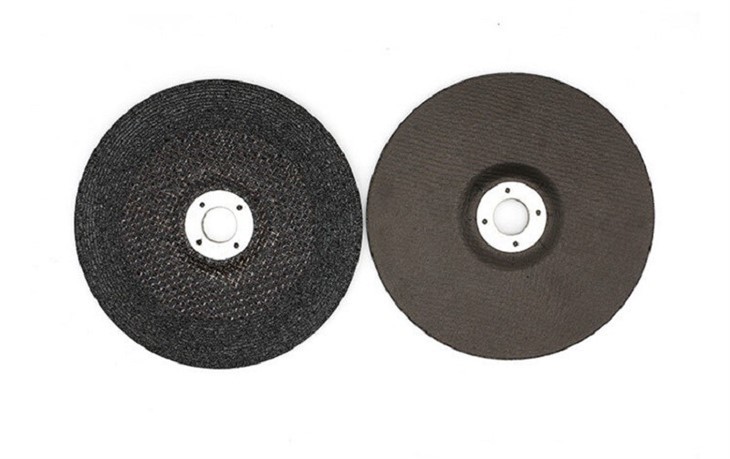
What Is Grinding Disc?
Abrasive wheels are wheels, cones or cups that have abrasive particles like grit that are bonded with either inorganic or organic substances like resin.
These bonds are cured at low temperatures. They’re shock-resistant, self-dressing, and tough. These materials are more suited to applications that don’t need a lot of precision such as cutting off or fettling.
Organic bonding substances are used for handheld and portable tools and machines. Inorganic bonding substances are usually used for grinding applications that require precision. These have a strong, hard, yet brittle structure and hold their shape. Inorganic bonds require a lot of heat for curing and are furnace-fired.
Efficiency of material removal
One of the advantages of grinding wheels is their exceptional ability to remove material efficiently. The abrasive grains embedded in the wheel's surface cut, grind, and/or shape material, make it an effective tool for quickly removing excess material and achieving the form that is required of the workpiece.
Versatility across different materials
Grinding wheels are versatile tools that can handle a wide range of materials, from metals like steel and aluminum to hard materials like ceramics and stone. This versatility makes them invaluable in industries where a large range of materials have to be used on projects.
Precision and accuracy
Grinding wheels in skilled hands can provide precision and accuracy in shaping and finishing. The controlled abrasion offered by the wheel allows for fine adjustments, enabling craftsmen to achieve tight tolerances and smooth surfaces, crucial in applications such as tool and die making.
Available in different types and sizes
Grinding wheels are available in a range of types and sizes, each designed for specific tasks. From straight wheels for surface grinding to cup wheels for contouring and cylindrical wheels for precision grinding, the variety allows users to select the most suitable tool for their application.
Longevity and durability
High-quality grinding wheels such as the wheels manufactured by kamel grinding tools are constructed with durable materials and bonded abrasives giving excellent longevity. This durability reduces the frequency of replacements and provides cost savings over the long term.
Cooling mechanisms
Our most advanced grinding wheels incorporate cooling mechanisms in to the wheel, these features include a more porous structure and specially formulated bonds. These improvements help dissipate heat generated during the grinding process, prevent overheating, and minimize the risk of thermal damage to the workpiece.
Improved efficiency
Grinding wheels can improve job efficiency by their ability to quickly shape or finish materials. This is particularly important in industries where time is a critical factor. Using quality grinding wheels can contribute to increased worker productivity and faster project turnaround times.
Large range of applications
Grinding wheels find use in a large range of industries, including manufacturing, automotive, aerospace, and construction. Whether for precision machining or heavy-duty material removal, the adaptability of grinding wheels makes them a go-to tool on a large range of projects and workpieces.
Ease of use
Grinding wheels, whether mounted on handheld grinders or integrated into larger grinding machines, are generally user-friendly. Their ease of use makes them accessible to a wide range of users, from seasoned craftsmen to novice operators.
What Machines Are Associated with Abrasive Wheels
Angle grinders
Angle grinders might also be called disc grinders or side grinders. They’re a type of handheld power tool that’s used for abrasive cutting and polishing. Originally, they were only used with rigid abrasive discs but now there are all sorts of attachments and cutters available.
Chop saws
Chops saws are power tools that are used to make a straight cut in wood. Some chop saws have features that mean you can measure and cut angles in the wood – this would then be called a mitre saw. A chop saw looks like a circular saw, but these are faster and more precise.
Bench grinders
Bench grinders are a permanently installed type of grinder. They’re used in workshops to perform rough grinding.
Petrol cut-off saws
Petrol cut-off saws are also known as steel chop saws. They’re hand-operated machines that are used to cut small areas of steel, stone, asphalt and concrete. They’re often the go-to cutting machine in the construction industry.
Table saws
Table saws are also known as bench saws. They’re a tool used with woodwork. The abrasive wheel protrudes through the bench. The bench supports the material as it’s being cut.
Types of Grinding Disc
Straight grinding wheels
These are the most common abrasive wheels, and you’ll find them on bench grinders.
Cylinder / wheel ring wheels
These have a wide and long surface but don’t have mounting supports in the centre. They’re used in vertical or horizontal spindle grinders to make a flat surface.
Tapered abrasive wheels
Tapered wheels are the same as a straight grinding wheel, but they taper outwards and are wider in the centre than they are at the edges. They’re used for gear teeth or thread.
Straight cup wheels
Straight cup wheels are used to make flat surfaces and for sharpening tools in cutter grinders. They’re shaped like a cup, as you might expect from the name.
Dish cup wheels
A dish cup wheel is used to cut slots and crevices and is very thin. It’s shaped like a dish cup and has a flat centre that points outwards towards the edge.
Saucer grinding wheels
Saucer grinding wheels are used for milling cutters and twist drills. These are flatter than dish wheels.
Material of Grinding Disc
Ceramic aluminium oxide
Often referred to as just 'ceramic”, norton quantum’s patented ceramic form of aluminium oxide is harder and sharper than conventional abrasive grains.
This ceramic grain has a unique microcrystalline structure that is self-sharpening. This ultimately reduces the regularity that the grinding wheel needs dressing as well and providing a significantly cooler cutting action when in use.
Silicon carbide
Harder than standard aluminium oxide with a very sharp abrasive grain. It is a versatile material, recommended for grinding relatively soft metals such as aluminium or cast iron but can also be used on extremely hard materials such as cemented carbide.
Zirconia alumina
For use in rough grinding applications where high stock removal is required. This grain is associated with high tech resin bonds.
Aluminium oxide
Generally recommended for grinding materials of high tensile strength, such as stainless steel and tool steels but it can also be used on some high tensile aluminium and bronze alloys.
Grinding wheels should only be used for straight cuts. Twisting or binding the wheel will cause fatigue and segment loss. Excessive pressure should not be applied when cutting.
All workpiece materials need to be securely supported when performing any cutting or grinding process. Excessive overhang should be avoided; even a slight tilt will produce an angled cut.
Feed and Grinding Speeds
The material must be fed into the grinding wheel at the proper speed. Feeding too fast will cause chatter and vibration. This will result in a poor cut and can damage the cutting edge of the grinding wheel.
Grinding wheels work best at speeds of 5,000 to 6,000 surface feet per minute. Running at lower speeds may result in glazing. Using the wrong cut-off wheel (i.e. one with a bond that is too hard for the material being machined) will produce glazing. The easiest way to avoid this is to use a blade that matches the material. Dressing the blade is a maintenance technique, but dressing slows production and shortens the life of the wheel.
Dressing removes debris that has clogged the abrasive surface due to the cutting operation. Surface dressing restores the sharp abrasive edge of the coating. Dressing rods (usually aluminum oxide or silicon carbide) are used to cut or remove chips and expose new material. When first dressing, make an arrow mark on the wheel to show the direction of rotation and always rotate the wheel in the same direction. Dressing the wheel from both directions will damage the wheel. Dressing is done by simply making straight cuts with the dressing rod or dressing bar. Cut away thin slices with each pass. Only one or two cuts with the dressing rod are sufficient. If a dressing rod is not available, a section of asphalt can be used. Make a few cuts on the asphalt and the blade should be clean. Coolant should be used for best results. Coolant needs to be sprayed where the cut-off wheel and material come into contact. A weakly soluble oil solution can be used to reduce corrosion. If dark streaks form along the sides of the cutting edge, the wheel is overheating. Overheating can cause the wheel to break. If dry cutting, allow the wheel to cool for about 10 seconds for every 30 seconds of cutting.
Use the correct grade of wheel designed for the material to prevent injury from reaction forces or kickback. Never use a wheel that shows signs of breakage, fatigue, or segmentation.
Grinding wheels can get complicated. They are available in a variety of sizes, shapes and grits, natural or synthetic abrasive minerals as well as the type of bonding material used to fuse the abrasives to the surface of the wheel itself. However, the most important aspect to effective grinding wheels and their workings are the abrasive grains they employ. The abrasive materials spread throughout the wheel are hard, sharp, mineral grains that are found in nature or are man-made, and are strong enough to allow the wheel to grind the metal through friction. However, with the advancements in abrasive technology, not all abrasives are created equally. There are alternatives that utilise precision-shaped ceramic grains that pave the way to significant performance improvements to grind faster, last longer and deliver a better finish.
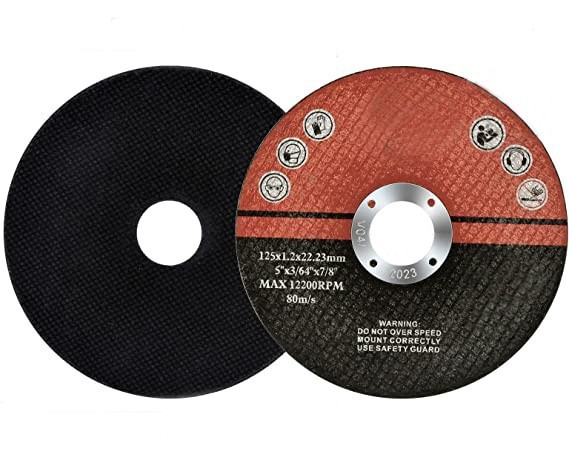
Appropriate personal protective equipment must be used. Loose clothing can get caught between the grinding wheel and the workpiece and should not be worn. Likewise, long hair should be tied back. Ensure grinding is done in an area away from other workers and that the work area around the grinding operation is kept clean. Always check the grinding wheel for any damage, including cracks. Always ensure that the machine speed does not exceed the maximum operating speed marked on the wheel. Use ANSI B7.1 wheel guards. Position them to protect the operator. Verify that the machine spindle properly matches the wheel bore or threads. Always check that the flange is clean, flat, undamaged and of the correct type. Before grinding, run the grinding wheel in a protected area for one minute. Wear ANSI Z87+ safety glasses and additional eye and face protection if required. Use dust and/or protective measures appropriate to the material being ground. Hold the grinder firmly with both hands. Support the workpiece securely. Read the machine manual, operating instructions and warnings. Read the SDS for the wheel and workpiece material. Always handle and store the wheel with care.
Certificate


