


Abrasive Film






Why Choose Us?
Rich manufacturing experience
With more than 20 years of abrasive products manufacturing in China, we’re familiar with our raw material manufacturers well and also control raw material quality to ensure premium abrasive products.
more
Professional R&D
Our technical team is committed to developing new products to provide different industrial application solutions and supporting customers in expanding their product range to enhance market competitiveness.
more
Strictly inspection system
Advanced testing equipment, strict testing standards, and strict quality control, over 13 years of experience as abrasives engineers' layer-by-layer check from raw material to finished products to ensure each batch of shipment is qualified before dispatching.
more
Well-trained team
Our team workers are well trained, customer requirement oriented, and provide professional solutions to meet customers' requirements.
more
Logistics and transportation
We have cooperated with professional freight forwarders by sea, land, and train for years, providing customers with the best solution to shipment, and updating the latest shipment tracking every week.
more
Solid technical strength
Advanced German production equipment, and standardized production process to ensure product quality qualified rate up to 99%.
Our production lines have passed the European Union CE certification, our abrasive products have been exported to Europe, North America, South America, the Middle East, and Asia with good market feedback, and the customer praise rate is more than 99% of the worldwide customers jointly choose your best abrasives manufacturer --- China Golden Abrasives.
more
After-sale service system
We pay more attention to our product's market feedback and follow up on the performance of our products closely. Once we get some complaints from your customers, we'll submit the pictures and video to our technical department for analysis, and then provide you with a solution to solve the issue in time.
more
What is abrasive film?
The abrasive film, also known as abrasive sheets or sandpaper, is a coated abrasive used in a variety of grinding, smoothing, and finishing applications. It usually consists of a thin layer of abrasive particles bonded to a flexible backing material - Mylar. Abrasive particles can be made from materials such as aluminum oxide, zirconium corundum, or ceramic, and they come in different grit sizes to suit the different roughness levels required for the job.
The film part of "sand film" means that the backing material is a thin, strong, flexible plastic film rather than traditional paper or cloth. Abrasive films are typically used where greater precision, durability, or moisture resistance is required, such as in the automotive, aerospace, or woodworking industries. They are used for a wide range of tasks ranging from surface preparation, painting, or rust removal to finishing and polishing operations.
Advantage of abrasive film
Excellent wear resistance and cutting performance
Thin film disc sand has a special coating process. Compared with ordinary sandpaper stearate, it is wear resistance and cutting performance are better. This characteristic enables the film disc sand to maintain high working efficiency during use and also prolongs its service life.
more
Precision and control
The abrasive film provides high precision due to its thin and flexible characteristics, allowing it to closely fit complex or complicated surfaces, and provide more precise and stable cutting effects when used to meet various fine requirements. processing needs.
more
Consistent finish
he even distribution of abrasive particles on the film ensures a consistent, even finish on the workpiece. This consistency is critical to achieving the desired surface quality in finishing applications.
more
Good flexibility and clogging resistance
Film disc sand has good flexibility, can adapt to various complex processing surfaces, and is not easily damaged. This allows it to perform well when processing a variety of materials, especially when processing curved surfaces or irregularly shaped materials. The advantages of thin film disc sand are even more obvious. The open structure of the abrasive membrane minimizes debris clogging, allowing for continuous cutting action and reducing the need for frequent replacement or cleaning.
more
Durability and service life
Compared with traditional paper-based sandpaper, film disc sand adopts a double-layer composite glue design. This design makes the sand grains less likely to fall off, and its synthetic backing has better tear resistance and wear resistance. performance and durability. They tend to last longer, especially in humid environments where the paper can break down.
more
Heat resistance
Films made of heat-resistant materials can withstand higher temperatures, which is beneficial for applications where friction generates large amounts of heat, such as grinding or polishing. The film's rapid heat dissipation ability prevents excessive heat accumulation that could damage the workpiece or the abrasive itself, extending service life.
more

[Blue film sanding disc]:
Blue zirconia film disc sand is an efficient grinding tool that evenly and tightly coats selected high-quality zirconium corundum abrasives on high-strength fiber mesh substrates. This adhesive-backed sandpaper disc is widely used in metal surface treatment, wood processing, automobile manufacturing, aerospace, precision instruments, and other fields with its excellent wear resistance, good cutting force, and unique self-sharpening properties.
The blue hook and loop sanding discs use durable blue zirconium corundum as the main abrasive. Zirconium corundum is smelted from alumina and zirconia at high temperatures. It has the characteristics of high hardness, good toughness, and good heat resistance. It can effectively improve grinding efficiency and ensure the surface quality of the workpiece. Precision and finish, this material is known for its exceptional strength and long-lasting performance and is commonly used in the metalworking, woodworking, and automotive industries for tasks such as surface preparation, deburring, grinding, and finishing.
The film backing of our PSA sanding discs uses high-strength fiber mesh as the base material. Hook and loop sandpaper has the advantages of high tensile strength, good elasticity, self-sharpening, and not easy to deform. It is suitable for high-speed rotating working environments and can effectively prevent stress due to The problem of disc breakage caused by unevenness. Blue adhesive sanding discs' inherent flexibility and durability allow them to conform to curved surfaces and contours easily. During the grinding process of film disc sand, the abrasive grains will gradually fall off with wear, exposing new sharp abrasive grains, thereby maintaining a stable grinding effect. Additionally, the film backing resists tearing and provides better edge abrasion resistance compared to traditional paper-backed discs, extending product life and reducing downtime for replacing discs.
Blue film sanding discs are not only durable and efficient, but they perform well on a variety of surfaces. Its excellent heat resistance ensures that it will not wear out quickly even in high-temperature environments. It is widely used for fine grinding and polishing of various materials, such as surface deburring, polishing, and mirror treatment of stainless steel, aluminum alloy, titanium alloy, cast iron, carbide, and other metal materials; it is also suitable for wooden furniture, plastic products, Surface modification and beautification of non-metallic materials such as automobile parts.
Blue velcro sanding discs provide a variety of particle size specifications to meet the grinding needs of different stages, including coarse grinding, medium grinding, fine grinding, ultra-fine grinding, and other grades. The diameters are various and can be customized according to the actual needs of customers.

[Green film sanding disc]:
Green zirconia film discs are specialized discs designed for demanding grinding applications. The high hardness of zirconium corundum enables excellent performance in a variety of high-intensity grinding and cutting operations. Green round sanding disc has excellent wear resistance and corrosion resistance, can maintain stable performance during long-term use, and effectively extends its service life. Due to its excellent grinding and polishing properties, the automotive green sanding disc is widely used for surface treatment of various materials such as metals and non-metals.
Excellent wear resistance and high hardness: The zirconium corundum material itself has extremely high hardness and wear resistance, and the green sanding discs' self-adhesive sand has been carefully processed to further improve its hardness. This high hardness allows the green zirconium corundum film disc sand to effectively resist wear during the grinding process and maintain long-term sharpness, thus improving grinding efficiency and service life.
Excellent thermal and chemical stability: In high-temperature environments, wet and dry sanding discs sand can maintain stable performance and are not prone to deformation or damage. At the same time, it also has excellent corrosion resistance and can resist the erosion of various chemical substances, ensuring stable grinding results in complex working environments.
Good self-sharpening properties: During the grinding process, the sand particles can automatically fall off and expose new sharp surfaces, thereby maintaining a continuous grinding effect. This self-sharpening property allows the green zirconium wet dry sandpaper automotive film disc sand to maintain efficient grinding performance during long-term use, reducing the frequency and cost of replacing the grinding wheel.
The film backing of these discs provides flexibility and tear resistance, allowing them to conform to irregular surfaces and contours while withstanding heavy use. This film backing also helps reduce load and heat build-up during operation, resulting in cooler cuts and improved performance in high-temperature environments. Commonly used in metal processing, especially in applications such as weld grinding, heavy cutting, and ferrous metal surface treatment. velcro-backed sanding discs are also suitable for stainless steel, carbon steel, and other alloys where high performance and long life are required.
Hook and loop wet sandpaper are available in a variety of grit sizes to meet different levels of material removal and surface finishing requirements. They are compatible with a variety of grinding equipment, including angle grinders, disc grinders, and orbital grinders.

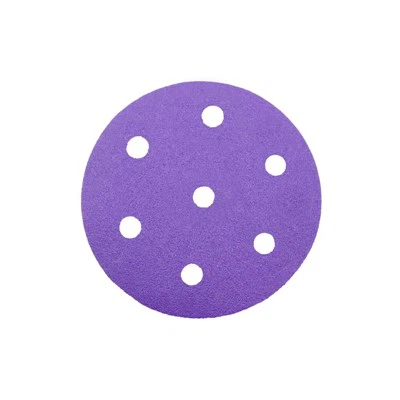
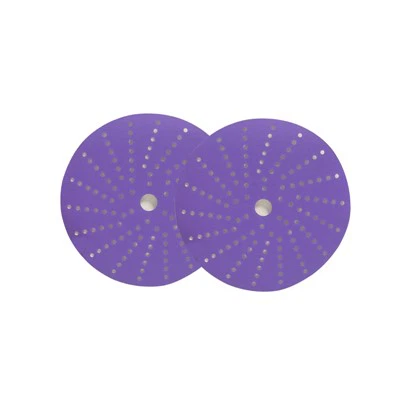
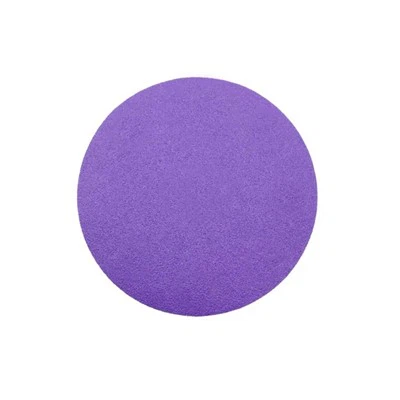
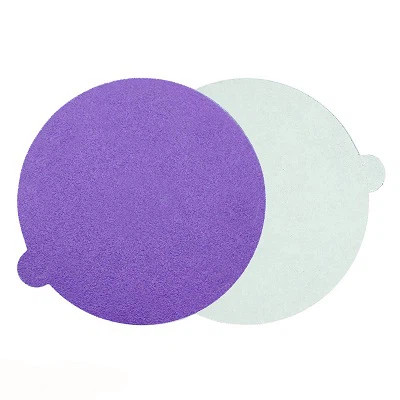
[Purple film sanding disc]:
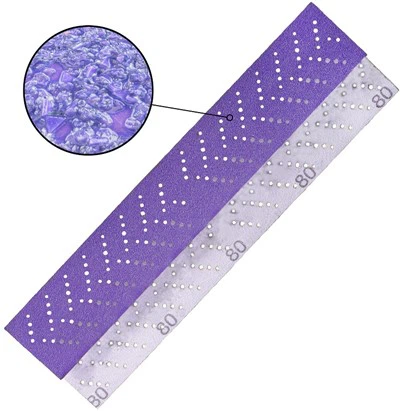
Purple Ceramic Film Discs are advanced abrasive discs designed for demanding sanding applications where high performance and durability are critical. Purple Disc Sand exhibits excellent hardness, wear resistance, and toughness. purple sanding disc's high hardness can effectively resist wear during the grinding process and maintain long-term sharpness; its good wear resistance makes the product have a long service life; hook loop sandpaper purple disc's excellent toughness makes the product less likely to break or be damaged during use. These properties make the purple ceramic film disc sand perform excellently in all types of grinding operations.
Durability and wear resistance: Purple hook and loop wet film disc uses specially formulated high-performance ceramic microcrystals as abrasives. This abrasive has extremely high hardness, high temperature resistance, and wear resistance, and can effectively target various difficult-to-grind materials for fine processing. Chemical grinding while ensuring the smoothness and accuracy of the workpiece surface.
Both strength and flexibility: high-strength, impact-resistant fiber mesh is selected as the basic carrier, so that the paint purple sanding disc can maintain good morphological stability under high-speed rotation and strong grinding conditions, effectively preventing the sand disc from breaking, and at the same time it is moderately flexible The properties help to better fit the contour of the workpiece and improve the grinding effect.
Excellent self-sharpening and flexibility: During the grinding process of the hook and loop automotive film sand, the abrasive grains will naturally fall off with wear, thereby exposing new sharp abrasive grains, continuously providing effective grinding ability, and greatly extending the life of the sanding disc. service life. The film backing of the purple ceramic discs allows them to easily conform to curved surfaces and contours. This ensures efficient material removal even on complex shapes, thereby improving the overall quality of the workpiece.
Purple ceramic film discs are commonly used in the metalworking, woodworking, and automotive industries for tasks such as grinding, deburring, surface preparation, and finishing. Their superior abrasive properties make them particularly effective for challenging applications where other abrasives may struggle.
Application of Abrasive Film:
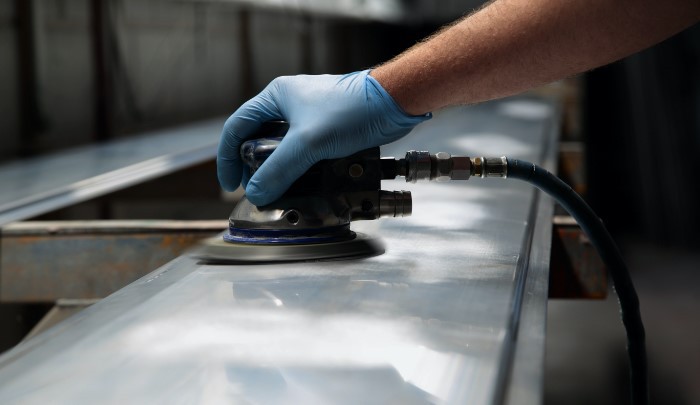
Metal processing
Grinding and smoothing of welds; deburring of sharp edges; removal of surface defects and rust; surface treatment before painting or coating; finishing and polishing of metal surfaces. Such as deburring, smoothing and polishing of engine parts, cylinder heads, turbine blades, etc. Because its abrasive particles are evenly distributed through the abrasive film process, abrasive film sanding disc can provide precise and delicate grinding effects, ensuring high precision and high quality on the workpiece surface.
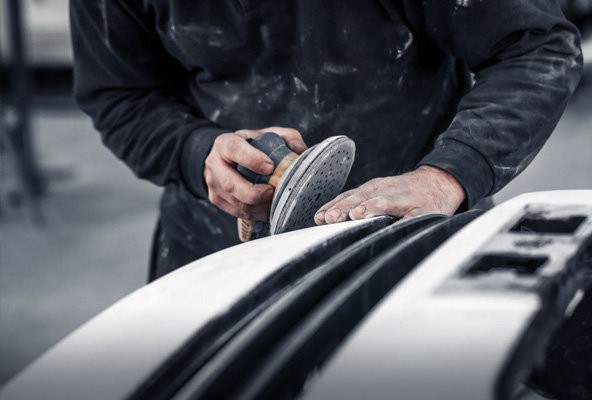
Woodworking
Sanding wooden surfaces to a smooth finish; removing old paint, varnish or stains; shaping and carving wood; deburring the edges of wooden components; preparing wood for staining or finishing. For grinding and polishing surfaces such as solid wood and artificial boards, the adhesive layer or flocking design on the back can easily adhere to the grinder, effectively preventing the sandpaper from slipping during the grinding process and ensuring a smooth and even grinding surface.
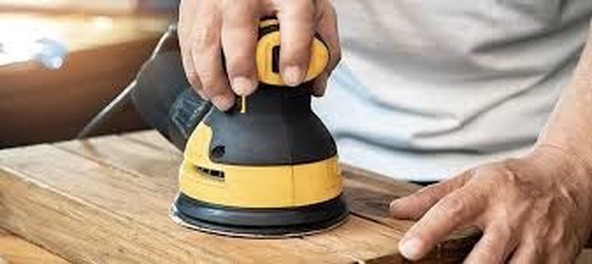
Automotive
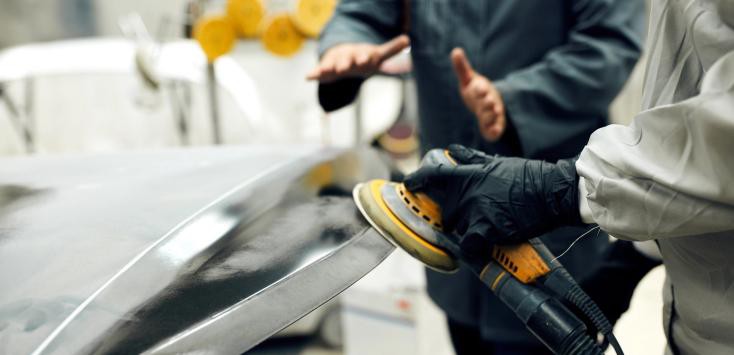
Sand body panels and frames during repair or restoration; Remove old paint, primer, or rust from automotive surfaces; Eliminate body defects; Prepare surfaces for painting or refinishing; Polish automotive finishes for a smooth appearance . In the pre-treatment stage before automotive refinishing, automotive film disc sand is used to remove excess material from old paint, metal substrates, and fillers to ensure good adhesion between the new paint layer and the substrate.
Composite materials
Grinding fiberglass, carbon fiber or composite panels; shaping and trimming of composite materials; deburring the edges of composite parts; preparing composite surfaces for bonding or painting. Zirconia film disc sand is used to remove delaminations, burrs and surface defects to ensure the mechanical properties and appearance quality of composite materials.

Plastics
Sand plastic parts to remove defects; smooth rough edges and surfaces; prepare plastic parts for painting or coating; polish plastic surfaces to obtain a smooth finish.

Electronics and precision engineering
Finishing and polishing precision surfaces; deburring small parts; smoothing edges and contours of precision parts; surface treatment for electronic assembly or soldering.
FAQ
Q: 1. What are film sanding discs?
They are commonly used in industries such as automotive, aerospace, woodworking, metal fabrication, and more, for tasks ranging from deburring, paint removal, and rust eradication, to fine finishing and polishing operations. Film sanding discs come in different grit sizes to accommodate different stages of the sanding process, from rough stock removal to fine finishing. The film backing also offers durability and resistance to tearing, ensuring longer life and improved efficiency over traditional paper-backed abrasives in certain applications.
Q: 2.What is the difference between abrasive sandpaper disc and abrasive film disc?
- Abrasive sandpaper discs typically have a backing material made of paper or cloth. Paper-backed discs are common and are usually made of heavy-duty paper, while cloth-backed discs offer added durability and flexibility.
- Abrasive film discs, on the other hand, have a backing material made of flexible polyester or polyethylene film. This film backing provides exceptional flexibility and durability, allowing the discs to conform to curved surfaces and contours easily.
2. Durability and Flexibility:
- Sandpaper discs, especially those with paper backing, are generally less durable and flexible compared to film discs. They are more prone to tearing and loading, particularly when used for heavy-duty applications or on irregular surfaces.
- Film discs are known for their superior durability and flexibility. The film backing resists tearing and loading, making them more suitable for demanding applications and intricate sanding tasks.
3. Resistance to Clogging:
- Film discs typically have an open-coat design that helps prevent clogging by allowing debris and swarf to be easily expelled from the abrasive surface. This reduces the risk of premature disc wear and maintains consistent cutting action.
- Sandpaper discs may be more prone to clogging, especially when used with soft or gummy materials. Clogging can affect the disc's performance and require more frequent disc changes.
Q: 3.What are the grits of abrasive film sanding disc?
Medium grits: From P80 to P120, they're suitable for moderate stock removal and preparing surfaces for finer sanding.
Fine grits: From P150 to P220, these are used for finer sanding where a smoother surface finish is desired.
Extra-fine grits: From P240 to P320, they're ideal for prepping surfaces for paint, varnish, or other coatings and for light sanding between coats.
Very fine grits: From P400 to P1000, these are used for achieving high-quality surface finishes and for final polishing steps.
Micro grits or super fine grits: From P1200 to P2000 for extremely refined finishing jobs, especially in applications requiring mirror-like finishes or ultra-smooth surfaces.
Q: 4.What are the key factors that affect the life of sanding discs?
2. Grit size: Coarser grit discs remove material more aggressively and thus wear out faster. Finer grits are used for finishing and can last longer because they remove less material per pass.
3.*Quality of the sanding disc: High-quality discs with better bonding and more durable abrasives generally last longer.
4. Usage technique: Aggressive pressure, continuous use without allowing the disc to cool, or sand across the grain instead of with it can all significantly reduce the life of the disc.
5. Condition of the workpiece: If the surface is heavily contaminated or has deep scratches, the disc may wear out quicker as it works to remove these imperfections.
6. Type of disc: Film-backed sanding discs may last longer than paper ones due to their durability and resistance to tearing.
7. Machine speed and power: Higher-powered machines combined with high-speed operation can lead to faster abrasive wear.
Q: 5.What is the difference between sanding disc holes and no holes?
- Sanding discs with holes are designed for use with sanders equipped with dust collection systems. These holes allow for efficient removal of dust, debris, and particles generated during sanding, improving visibility, reducing clogging, and prolonging the life of the abrasive.
- Sanding discs without holes are generally used on sanders without dust collection capabilities or in situations where dust extraction is not a priority. Without holes for dust extraction, these discs may experience more clogging and reduced efficiency, particularly when sanding finer materials or during prolonged use.
2. Cooling and Heat Dissipation:
- The presence of holes in sanding discs also facilitates better airflow and heat dissipation, helping to prevent overheating of both the disc and the workpiece during sanding.
- Sanding discs without holes may retain more heat during use, which can potentially lead to premature wear of the abrasive and degradation of the sanding surface.
3. Surface Finish:
- Sanding discs with holes can sometimes leave behind a patterned finish on the workpiece due to the arrangement of the holes. While this may not be desirable in certain applications, it can be advantageous in others, such as when applying adhesives or coatings that require enhanced surface adhesion.
- Sanding discs without holes typically produce a smoother, more uniform finish on the workpiece, as there are no interruptions in the sanding surface. This makes them well-suited for applications where a consistent surface texture is desired, such as fine woodworking or finishing automotive paintwork.
Q: 6.Why do sanding discs fly off?
2. Worn or damaged fasteners: Over time, the retaining nuts, bolts, or clamps that hold the sanding disc in place can become worn or damaged, affecting its grip. Regular inspection and replacement of worn parts is necessary.
3. Too fast: Operating the tool at a speed that exceeds the recommended maximum RPM of the grinding wheel may cause it to vibrate excessively and eventually break off.
4. Uneven pressure distribution: Excessive pressure on one side of the brake disc or a sudden impact on a hard point can cause imbalance, causing the brake disc to fall off. Maintain even pressure and control during use.
5. Damaged brake discs: Pre-existing cracks, warping, or uneven wear on the brake disc can compromise its structural integrity, making it more susceptible to falling off.
6. Using the incorrect disc size or type: Using a disc that does not fit the tool pad or is not designed for a specific type of tool can cause shedding.
7. Overheating: Excessive heat generated by prolonged use without taking a break can cause the adhesive or mechanical bond between the disc and tool to weaken, causing the disc to fall off.
