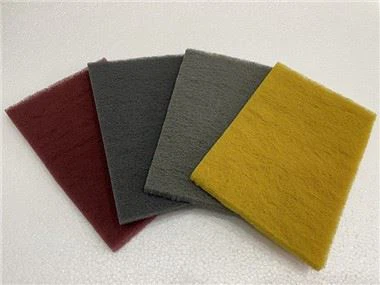
Abrasive Sandpaper Base
When producing coated abrasives, the three key elements are base paper, abrasive, and binder. Among them, base paper is the most diverse and widely used material. Different papers can be used to produce waterproof sandpaper, dry sandpaper, wood sandpaper, paper-backed sanding belts, etc. The quality of the base paper also has the greatest impact on the overall quality of the final product. This article aims to clarify the base paper selection process and provide insights to help manufacturers stabilize and improve product quality.
Current situation of base paper manufacturing enterprises
As a special industrial paper used in sandpaper production, the market for base paper is relatively small. The annual domestic demand for base paper is less than 20,000 tons. However, with the acceleration of China's industrialization process, there has been significant growth in recent years.
Common misunderstandings in base paper selection
1. General methods for coarse and fine sandpaper
It is important to understand that there are significant differences between coarse and fine sandpaper in terms of grit concentration, primer application, and double-sided tape application. Therefore, they have different requirements for base paper. Coarse-grit sandpaper requires a higher-weight base paper. Fine-grit sandpaper, on the other hand, requires a base paper that favors a lighter weight. Additionally, fine-grit sandpaper requires a smoother surface with no visible paper fibers, as finer-grit particles and lower binder levels require greater smoothness.
2. Alignment between base paper and adhesive
The selection of base paper and adhesive should be coordinated. Different qualities of sandpaper (Grade A paper, Grade B paper, latex backing) require adjustments during the production process. For example, Grade A paper used to produce silicon carbide clear sandpaper should be paired with an epoxy resin adhesive. Grade B paper, used for ordinary waterproof sandpaper, is best used with alkyd resin adhesives. Latex-backed paper for dry-sanding super-coated papers, requiring an epoxy or phenolic resin adhesive. It is critical to avoid mismatching of these components, as this can lead to wear and durability issues.
3. Correctly identify the original paper surface
The original paper has a front side and a backside. The side facing the wire section of the paper machine is called the back side, while the other side is called the front side. The front side tends to be smoother and more even. Due to different equipment and requirements of coated abrasive manufacturers, there may be significant differences in oil absorption and smoothness between the two sides of the base paper. Therefore, the appropriate base paper surface must be selected and used according to the specific requirements for producing coarse and fine-grained sandpaper.
4. Temperature resistance of base paper
The manufacturing process of the base paper determines its temperature resistance. Ordinary waterproof sandpaper usually requires a resistance of 70-80°C, which can be achieved using rosin as a binder. However, for Grade A base papers or latex-backed papers, which may undergo processing in excess of 100°C, it is crucial to use the right adhesive to prevent embrittlement and ensure longevity.
5. Rely solely on tensile strength
While tensile strength is an important parameter, it should not be the only determining factor. Other physical indicators such as weight, density, folding resistance, absorbency, and moisture content should also be considered. These factors jointly affect the overall quality and performance of the base paper.
Requirements for sandpaper base paper
1. Appearance quality: The color of the base paper should be uniform, especially colorless paper, which must be consistent in each batch. Excessive dust, wrinkles, transparency, or holes are not acceptable. This is especially important with colored paper, where any imperfections will be very noticeable.
2. Intrinsic quality: The base paper should be made from 100% sulfate softwood pulp, rather than "sandwich paper" that is mixed with waste paper pulp during the papermaking process. It should be of a suitable weight for the specific type of sandpaper being produced.
Selecting the correct base paper is a critical step in the coated abrasive manufacturing process. By understanding the nuances and avoiding common misunderstandings, manufacturers can ensure that their products meet the highest quality standards.