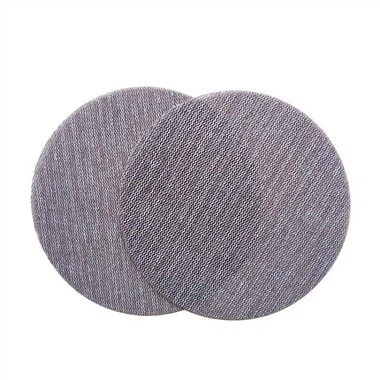
What Are the Tips and Methods for Sanding the Wood?
 Choosing the Right Sandpaper Grit
Effective sanding begins with selecting the right sandpaper grit. Coarse grits (40–80) are used to remove rough saw marks and level uneven surfaces, while medium grits (100–150) refine the texture and eliminate scratches left by earlier steps. Fine grits (180–240) are ideal for final sanding before finishing, creating a silky surface ready for staining or varnishing. For ultra-smooth finishes, especially on painted or lacquered surfaces, grits as high as 320–400 are recommended between coats.
Sanding With the Grain
A key principle in wood sanding is always to work along the direction of the wood grain. Sanding across or against the grain can leave visible scratches that become even more pronounced after finishing. For curved or irregular surfaces, flexible abrasives-such as sanding sponges or non-woven pads-allow the tool to adapt naturally to the shape, achieving a consistent finish without cutting too deeply.
Selecting the Proper Sanding Tools
Hand sanding offers precision and control for small or detailed areas, while machine sanding-using orbital or random-orbit sanders-delivers speed and uniformity for larger surfaces. To prevent swirl marks, operators should move the sander evenly and avoid applying excessive pressure. For optimal results, dust extraction systems or vacuum attachments are essential to maintain a clean working surface.
Maintaining Surface Cleanliness
Dust control plays a vital role in achieving a professional finish. After each sanding stage, surfaces should be wiped with a tack cloth or microfiber rag to remove fine particles that can interfere with coatings. Cleanliness not only improves appearance but also enhances coating adhesion and durability.
Raising the Grain for Water-Based Finishes
When using water-based coatings, a technique known as "raising the grain" can improve surface smoothness. Wiping the wood with a damp cloth before final sanding causes the fibers to swell slightly. Once dry, a light sanding with fine-grit paper (220–320) removes the raised fibers, ensuring a perfectly smooth surface after finishing.
Flexible Abrasives for Complex Shapes
Modern abrasive technology has introduced flexible solutions-such as foam-backed discs and non-woven abrasives-that are ideal for sanding irregular edges, contours, and curved profiles. These materials distribute pressure evenly and resist clogging, reducing the risk of gouging or uneven sanding marks.
The Final Touch
A well-sanded surface not only feels smooth to the touch but also provides the ideal foundation for stains, sealers, and topcoats. In high-end woodworking, meticulous sanding is often the key difference between a standard product and a premium finish.
As the woodworking and abrasive industries continue to innovate, professionals increasingly rely on advanced sanding materials and flexible tools to achieve both efficiency and artistry. By combining the right abrasives, techniques, and attention to detail, craftsmen can turn every piece of wood into a flawless work of craftsmanship.