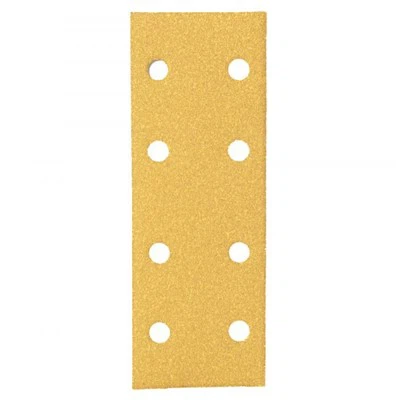
How To Choose The Right Sandpaper Grit For Automotive Primer Sanding
1. What Sandpaper Grit Is Best for Automotive Primer Sanding?
There is no single best grit for every automotive primer application. The appropriate grit depends on the primer system, curing conditions, surface defects, sanding equipment,t and the coating manufacturer's technical recommendations.
As a general starting point, the following grit ranges can help guide abrasive selection.
| Automotive Sanding Stage | Typical Grit Range | Main Purpose |
|---|---|---|
| Initial leveling of suitable cured primer | P180–P240 | Remove permitted surface irregularities and level the primer |
| General primer sanding | P240–P320 | Refine the surface and reduce coarser sanding marks |
| Fine surface preparation | P320–P500 or as specified | Refine the surface before the next coating step, where permitted |
These ranges are indicative rather than universal. Some coating systems require different sanding sequences, and certain fine-finishing operations may call for finer abrasives. Always follow the primer manufacturer's technical data sheet.
P180–P240: Initial Primer Leveling
P180 to P240 abrasive sandpaper may be suitable for selected cured primer surfaces that require leveling or the removal of permitted irregularities.
At this stage, the main objective is controlled material removal. Excessive pressure or an unnecessarily coarse grit can create deep sanding scratches that are difficult to remove during subsequent preparation.
For automotive refinishing applications, choose an abrasive that provides the required cutting action without compromising the primer layer.
P240–P320: General Primer Sanding
P240 to P320 abrasives are commonly considered for general primer sanding and surface refinement, subject to the coating system's requirements.
This stage focuses on reducing scratches from earlier sanding while maintaining a sufficiently uniform surface. The choice of abrasive backing, sanding, and equipment also affects the final result.
For professional users, testing different abrasive constructions can help identify a suitable balance between material removal, surface consistency, and abrasive life.
P320–P500: Fine Surface Preparation
P320 to P500 abrasives may be appropriate for finer primer preparation when specified by the coating manufacturer.
At this stage, the objective is to refine the surface and minimize sanding marks that could affect the next finishing operation. An excessively aggressive abrasive may introduce scratches that remain visible after coating.
The correct grit should always be selected according to the intended coating process, not simply because a finer number appears to produce a smoother surface.
2. How to Avoid Sanding Scratches on Automotive Primer
Sanding scratches are a common concern in automotive refinishing. If coarse sanding marks are not properly refined, they may remain visible after the next coating stage.
Understanding the causes can help body shops select more suitable automotive sanding abrasives.
Problem 1: Using the Wrong Grit Sequence
Moving directly from a coarse abrasive to a much finer grit may leave deeper scratches that the finer abrasive cannot remove efficiently.
Solution: Follow a controlled grit progression. Inspect the surface between stages and confirm that the previous sanding marks have been removed before moving to the next grit.
Problem 2: Applying Excessive Sanding Pressure
Excessive pressure can cause uneven material removal, localized wear, and inconsistent scratch patterns.
Solution: Use a compatible sanding pad and appropriate machine settings. Allow the abrasive to work without applying unnecessary pressure, and follow the equipment manufacturer's recommendations.
Problem 3: Using a Worn or Loaded Abrasive
Abrasive performance can change as the product wears or becomes loaded with sanding debris. This may lead to inconsistent cutting and additional surface defects.
Solution: Inspect the abrasive regularly and replace it when its performance deteriorates. Consider abrasive construction, primer condition,n and dust extraction when selecting products.
Problem 4: Ignoring Dust Extraction
Dust accumulation can interfere with sanding performance and contaminate the working area. In some conditions, trapped particles can also contribute to unwanted scratches.
Solution: Keep the work surface and sanding equipment clean, and use an appropriate dust extraction system. Select the abrasive and backing pad as a compatible system.
3. Abrasive Paper vs. Abrasive Film vs. Abrasive Mesh
Selecting the right grit is only one part of automotive primer sanding. The abrasive backing and construction also influence handling, durability, ty and dust extraction.
Abrasive Sandpaper
Abrasive sandpaper is available in different grit sizes, backing weights, and product formats. Depending on its construction, it can be used for a variety of automotive surface-preparation tasks.
Consider abrasive sandpaper when:
You need a broad selection of grit sizes and sheet or disc formats.
Your customers use conventional sanding sheets or compatible sanding discs.
You want to source different abrasive specifications for automotive refinishing.
Product selection should account for the abrasive grain, backing material, bonding system, and intended application.
Abrasive Film
Abrasive film uses a film backing instead of conventional paper. Depending on the product design, film backing can offer dimensional stability and a consistent support surface during sanding.
Consider abrasive film when:
Surface consistency is a key requirement.
Your customers use film-backed sanding discs or strips.
You need to compare different film constructions for primer preparation and finishing.
The actual surface finish and abrasive life depend on the abrasive grain, coating design, grit, backing,g and working conditions.
Abrasive Mesh
Abrasive mesh has an open, net-like construction that provides multiple paths for dust extraction. When paired with a compatible backing pad and extraction system, it can help remove sanding dust from the working area.
Consider abrasive mesh when:
Dust extraction is a priority.
Your sanding equipment supports mesh abrasives.
You want to evaluate an open-structure abrasive for suitable primer sanding applications.
Abrasive mesh is not automatically better than every paper- or film-backed disc. Performance depends on the complete sanding system and the specific product construction.
Which Abrasive Should You Choose?
| Selection Factor | Abrasive Sandpaper | Abrasive Film | Abrasive Mesh |
|---|---|---|---|
| Main consideration | Backing, grain and grit | Film construction and grit | Mesh design and extraction compatibility |
| Product formats | Sheets, discs and other formats | Discs, strips and other formats | Mesh discs and other compatible formats |
| Dust extraction | Depends on product design | Depends on hole pattern and design | Open structure supports distributed extraction paths |
| Best selection approach | Match the product to the sanding task | Evaluate surface consistency and backing requirements | Evaluate extraction performance and equipment compatibility |
For professional automotive refinishing, the best abrasive is the one that meets the required surface finish, works with the sanding equipment,nt and provides suitable performance under actual working conditions.
4. How to Select the Right Sanding Disc Grit
Sanding discs are widely used with compatible orbital or random orbital sanding equipment. When selecting sanding disc grit for automotive primer, consider the following factors.
- Disc diameter: Confirm that the disc matches the backing pad and sanding machine.
- Hole pattern: Check the hole configuration and alignment with the dust extraction system. A multi-hole disc may support dust extraction when paired with a compatible pad.
- Abrasive grain: Different abrasive grains have different cutting characteristics and application requirements.
- Backing material: Paper and film backings offer different handling and support characteristics. Select the construction according to the required operation.
- Grit sequence: Confirm that the chosen grit can remove the previous sanding marks while preparing the surface for the next stage.
For abrasive distributors and automotive refinishing suppliers, offering several grit options and disc configurations can help serve customers with different equipment and application requirements.
5. What Should Abrasive Buyers Consider Before Ordering?
Choosing automotive sanding abrasives for resale or professional use involves more than comparing grit numbers.
Before placing a bulk order, confirm the following specifications with your supplier:
- Product type: Abrasive paper, abrasive film, abrasive mesh, or another suitable construction.
- Grit range: The required grit sizes for your customers' sanding processes.
- Product dimensions: Disc diameter, sheet size, or strip dimensions.
- Hole pattern: The required configuration for compatible dust extraction equipment.
- Packaging: Bulk packing, neutral packaging,g or private-label packaging, depending on availability.
- Sample evaluation: Test the abrasive under actual working conditions before finalizing a specification.
- Supply requirements: Confirm order quantities, available specifications, production lead time, and customization options.
For importers, wholesalers, and private-label brands, clear product specifications can help reduce misunderstandings and make repeat purchasing more consistent.
6. Why Choose Golden Abrasives for Automotive Sanding Products?
Golden Abrasives supplies abrasive products for automotive refinishing, metalworking, and woodworking applications.
Our product range includes abrasive sandpaper, abrasive film, abrasive mesh, and abrasive sponge products for different surface-preparation requirements.
We work with B2B buyers who need to evaluate abrasive specifications for their markets, including distributors, wholesalers, and private-label brands.
Depending on the product and order requirements, we can discuss:
- Different grit sizes and product formats.
- Abrasive paper, film,m and mesh options.
- OEM and ODM cooperation.
- Private-label and customized packaging.
- Sample evaluation and bulk supply requirements.
Whether you are looking for automotive primer sanding abrasives or expanding your existing abrasive product range, our team can help you discuss suitable specifications for your application.
Need the Right Sandpaper Grit for Your Automotive Refinishing Market?
Looking for abrasive sandpaper, abrasive film, or abrasive mesh for automotive primer sanding?
Contact Golden Abrasives at sales@goldenabrasives.com with your required grit range, product type, dimensions, and estimated order quantity.
Our team can help you discuss suitable abrasive specifications, sample evaluation, and OEM or private-label requirements.
Golden Abrasives - Abrasive Solutions for Automotive Refinishing, Metalworking and Woodworking.