What Is The Difference Between Abrasive Mesh And Abrasive Sandpaper?
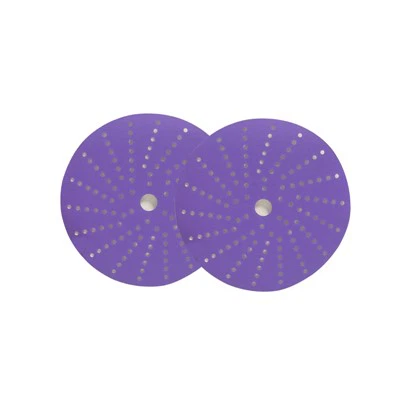
 Abrasive Net Sanding Disc is a special abrasive product whose main feature is that its abrasives are evenly fixed on an open mesh substrate. This substrate is usually a mesh structure made of plastic or metal, which has the characteristics of good breathability and self-cleaning properties. The abrasive particles can be hard materials such as aluminum oxide and ceramic, which are embedded in the grid through a special process to form a grinding medium that can maintain high cutting efficiency and effectively remove chips. The unique feature of the Abrasive net is that it can quickly dissipate heat and discharge dust during the grinding process. It is especially suitable for large areas, rapid, and good cooling conditions, such as shipbuilding, steel structure rust removal, and before painting in automobile manufacturing. processing and other occasions.
In contrast, abrasive sandpaper is a more common grinding tool, consisting of abrasives bonded to a paper or cloth-based material. According to different application scenarios, the abrasive grain size of sandpaper can be from coarse to fine to adapt to different levels of sanding needs, such as preliminary sanding of wood and metal surfaces, smoothing of paint coatings, and fine polishing. Abrasives sandpaper is suitable for manual sanding and is used with small power tools, while cloth sandpaper (i.e., emery cloth) is mostly used for continuous, large-area sanding with belt machines on industrial-grade heavy machinery due to its greater toughness and durability. 
Looking at the details, abrasive meshes are particularly suitable for wet grinding operations due to their open structure, where moisture can be quickly drained through the grid, avoiding clogging and reducing heat accumulation. Traditional sandpaper is divided into two types: dry sandpaper and water sandpaper. Water sandpaper can be used in water or humid conditions, but dry abrasive sandpaper may affect its adhesive performance when exposed to water, causing the abrasive to fall off and fail.
In summary, although abrasive mesh sand and abrasive sandpaper belong to the same category of abrasive tools, they have their advantages in practical applications. Sanding mesh, with its excellent ventilation, chip removal performance, and high-strength base material, is more suitable for efficient grinding in large-scale industrial production, while sandpaper, with its diverse base material selection and particle size distribution, can meet different needs from rough machining to fine polishing. The choice between the two should be comprehensively considered based on specific project needs, work efficiency, and economic benefits.